


The 24V Problem Nobody Talks About
Most dash cam recommendation lists treat semi trucks like oversized sedans. They're not. A Class 8 tractor-trailer runs a 24V electrical system, idles for hours in 160°F windshield temperatures, and vibrates at frequencies that kill consumer electronics in months. Plug a standard 12V dash cam into that environment, and you're looking at a fried power board before you hit your first weigh station.
In twelve years of building commercial-grade cameras, the failure report we see most often isn't a lens problem or a firmware bug: it's a voltage log showing a 24V input spike that the camera's regulator never recovered from. That's not a quality failure. It's a spec-sheet mismatch, and finding the best semi truck dash cam starts with eliminating it before the driver leaves the yard.
The financial exposure behind that failure is not theoretical. The FMCSA puts the average non-injury commercial vehicle collision at roughly $47,000, with injury crashes approaching $400,000 and fatal incidents exceeding $14.5 million (FMCSA Large Truck Crash Facts). "Nuclear verdicts," jury awards above $10 million, are increasingly common in trucking litigation, and video evidence is now the single most effective defense against them. With commercial auto premiums climbing 8–11% year-over-year (Zonar), the business case for a truck-grade dash camera is settled. The real question is which unit will survive the environment long enough to protect your investment. That depends on five engineering decisions most review sites never examine.

Five Features That Separate Truck-Grade from Consumer-Grade
Voltage compatibility: 12–36V input or nothing
Semi trucks, most European commercial vehicles, and many heavy equipment platforms run 24V systems. A dash cam designed only for 12V passenger cars will either refuse to power on or burn out its voltage regulator within weeks. Any serious semi truck dash cam for fleet deployment must accept a 12–36V input range. This is non-negotiable, yet a surprising number of units recommended in popular "best of" lists only support 12V. Check the spec sheet, not the marketing copy.
Supercapacitor vs. lithium battery
Cab temperatures behind a windshield routinely exceed 80°C in summer. Lithium-ion batteries swell, degrade, and eventually fail under that kind of sustained heat. Supercapacitors tolerate a much wider temperature range, typically –20°C to 65°C or higher, and don't suffer the same chemical degradation cycle. The tradeoff is that supercapacitors don't store enough energy to power standalone parking mode; you'll need a hardwire kit for that. For reliability in a heavy duty truck dash cam application, the supercapacitor wins every time. Forum discussions on DashCamTalk are filled with reports of lithium-powered units shutting down mid-summer or swelling after 12–18 months of truck use (DashCamTalk).
In our production testing, units rated to only 60°C showed solder joint fatigue within 18 months at ambient temps common in southwestern US summer cab conditions. We now specify 85°C-rated components for all truck-grade production runs, a requirement that adds cost but eliminates the most common hardware failure mode in the field.

Operating temperature rating
Look for units rated to at least –20°C to 70°C. Anything narrower risks thermal shutdown on hot days or cold-start failures in northern climates. The rating applies to the entire system, not just the front unit; rear cameras mounted externally face even wider temperature swings.
Multi-channel coverage and cable length
A single forward-facing camera leaves 80% of a semi truck's perimeter unmonitored. The blind spots along a 53-foot trailer are where most sideswipe and backing incidents occur. Three-channel (front, cabin, rear) is the minimum for owner-operators; four-channel (adding side coverage) is the fleet standard. But here's the detail that trips up buyers: most multi-channel systems ship with cables too short for a full-length trailer. A semi truck dash cam with front and rear coverage needs at least 15 meters of rear cable to route cleanly from cab to trailer tail. VIOFO's A329WW is one of the few systems that offers cable lengths up to 15 meters as a standard option. Most competitors top out at 6 meters and require aftermarket extensions.
High-endurance storage
SD cards in truck cabs face among the highest-stress environments for flash storage. The combination of constant vibration, extreme heat, and continuous write cycles burns through consumer-grade flash memory in as little as 3–6 months, based on high-endurance card manufacturer ratings and trucker forum reports. High-endurance cards rated for continuous recording typically last 12–24 months under the same conditions, and even those should be formatted monthly (ngxptech.com). SSD support, available on newer flagship models, extends that lifespan dramatically and eliminates the most common cause of "my dash cam didn't record the accident" failures.
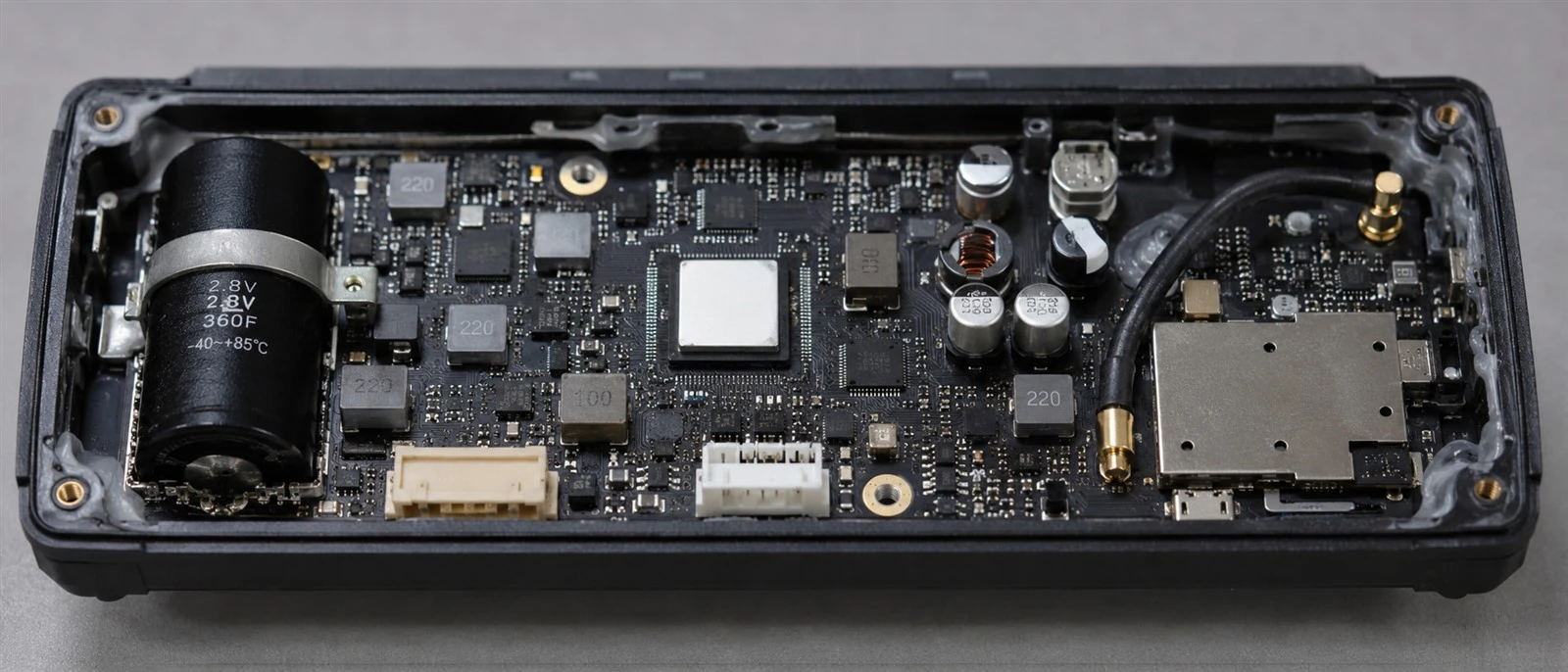
Understanding how dashcams work at the hardware level helps explain why these five factors matter more than headline resolution numbers.
Top Picks: Best Semi Truck Dash Cams Compared
Rather than ranking ten consumer products by Amazon star rating, the comparison below filters specifically for commercial truck viability. Every unit listed supports at least 12–24V input, uses a supercapacitor, and has been documented in fleet or owner-operator use.
| Feature | BlackVue DR970X-2CH | VIOFO A329WW 3CH | Vantrue N4 Pro S | Samsara CM32 |
|---|---|---|---|---|
| Channels | 2 (front + rear) | 3 (front + 2 exterior) | 3 (front + cabin + rear) | 2 (front + cabin) |
| Front resolution | 4K 30fps | 4K 30fps | 4K 30fps | 1080p |
| Sensor | Sony STARVIS | Sony STARVIS 2 (all ch.) | Sony STARVIS 2 IMX678 | Proprietary |
| Power source | Supercapacitor | Supercapacitor | Supercapacitor | Hardwired (fleet) |
| Operating temp | –20°C to 80°C | –20°C to 65°C | –20°C to 60°C | –20°C to 65°C |
| Max storage | 256GB microSD | 4TB SSD | 1TB microSD | Cloud + local |
| Rear cable length | ~6m standard | Up to 15m options | ~6m (extended avail.) | N/A (cloud) |
| Exterior waterproof | No (interior mount) | IP67 (both exterior) | IP67 (rear cam only) | No |
| Cloud / fleet mgmt | BlackVue Cloud (opt.) | No native cloud | No native cloud | Full Samsara platform |
| Street price (2026) | ~$430–480 | ~$480–520 | ~$370–420 | ~$35–45/mo/truck |
Best overall for owner-operators: BlackVue DR970X-2CH. The widest operating temperature range in this group, mature cloud platform, and a proven track record across thousands of fleet deployments. The 155° front field of view and 4K resolution capture license plates at highway speed. The limitation is two channels only. If you need side blind-spot coverage on an 18-wheeler, you'll need to add external cameras separately.
Best semi truck dash cam for blind-spot elimination: VIOFO A329WW 3CH. Purpose-built for commercial vehicles. The two IP67 waterproof exterior cameras mount under side mirrors or at trailer corners, directly covering the zones where most truck-involved collisions happen. SSD support up to 4TB means weeks of continuous three-channel recording without overwriting, a major advantage for long-haul operations. The 15-meter cable option solves the wiring problem that plagues other multi-channel systems on full-length trailers.
Best budget 3-channel option for trucking companies: Vantrue N4 Pro S. Triple STARVIS 2 sensors across all channels, IR night vision for cabin monitoring, and PlatePix license plate enhancement technology at roughly $100 less than the VIOFO. The IP67-rated rear camera handles exterior mounting. The main limitation for fleet use is the absence of a native cloud platform. Footage must be retrieved via Wi-Fi or by pulling the SD card.
Best fleet dash cam with integrated management: Samsara CM32. This isn't a standalone hardware purchase. It's a subscription-based platform with AI driver coaching, real-time alerts, and cloud video storage. The camera hardware itself is 1080p, lower resolution than the others, but for fleet managers who already juggle separate ELD compliance and telematics systems, Samsara's single-platform consolidation pays for itself in reduced administrative overhead. The resolution gap is real; the workflow consolidation is worth it.
These recommendations hold for the majority of semi truck dash cam reviews you'll encounter, but the split between standalone hardware and subscription platforms depends on fleet size. Fewer than 10 trucks with a single manager: standalone hardware plus a cloud add-on like BlackVue Cloud runs approximately $180/month total and covers 95% of what a full platform delivers. Once you cross 10 trucks or hire a dedicated safety manager, the per-unit management overhead flips the math toward a platform like Samsara. At 50+ trucks, the platform typically pays for itself in insurance discounts alone within 18 months. For a fleet beyond 50 trucks, the total cost comparison between platforms varies significantly by telematics bundle. Contact our engineering team for a fleet-specific cost breakdown.
What Goes Wrong: Failures That Reviews Don't Mention
The most expensive dash cam mistake isn't buying the wrong model: it's buying the right one and having it fail silently.
"One DashCamTalk user documented a rollover accident where their Garmin Dash Cam Mini had no footage of the incident. The camera had shut down from heat before the crash happened, and the SD card showed a recording gap during the exact period they needed evidence. They'd tested the camera in moderate conditions and assumed it would perform the same on a hot day behind a truck windshield (DashCamTalk)."
SD card failure is even more common. BlackVue's own support documentation warns against using SanDisk Ultra cards in their cameras. The continuous write pattern overwhelms consumer-grade flash controllers, causing random reboots and corrupted files. A separate DashCamTalk thread traces the issue to specific card architectures: cards designed for photo burst storage simply aren't engineered for the 24/7 write-and-overwrite cycle a commercial truck dash cam with GPS tracking demands (DashCamTalk).
Then there's the 12V-to-24V trap. Multiple forum reports describe drivers plugging consumer cameras into 24V truck circuits and destroying the units immediately. The product listing said "truck compatible." What it meant was the suction mount fits a truck windshield, not that the power circuitry supports 24V input. Knowing these failure points, and how to prevent them during dash cam installation, is as important as choosing the right hardware.
The ROI Case: How a Truck Dash Camera System Pays for Itself
Insurance carriers have moved past the "nice to have" stage. Progressive, HDVI, and other commercial trucking insurers now offer 5–20% premium discounts for fleets sharing video telematics data, with AI-equipped systems qualifying for 18–25% (Geotab). The liability numbers behind those discounts are stark: GPS Trackit clients report a 40% average reduction in accident-related costs (GPS Trackit), and according to Vantrue's own fleet deployment data, equipped fleets saw a 34% drop in at-fault accidents within 12 months (Dash Cam Insight).
These numbers, 40% cost reduction, 34% at-fault drop, cluster around a common mechanism: drivers who know they're recorded make different decisions. The hardware ROI is almost secondary to that behavioral shift. But here's the variable that the data doesn't capture: these results assume the cameras are actually recording when incidents happen. A fleet that installs consumer-grade units and loses a significant portion of footage to heat failures or card corruption doesn't see the full insurance benefit, and may face worse outcomes in litigation than having no cameras at all, since opposing counsel can argue the missing footage was deliberately withheld.

Installation and Legal Realities
The connector between tractor and trailer is where multi-camera installs silently die. A weatherproof connector that gets pinched during trailer detachment kills the rear feed while keeping the front camera running, so the driver has no idea the rear went dark three months ago. For any 18-wheeler with a full 53-foot trailer, plan on 15+ meters of cable from cab to tail, routed through an existing conduit or with a rated quick-disconnect that survives repeated coupling cycles.
A hardwire kit rated for 12–24V is essential. Cigarette lighter adapters are unreliable in commercial cabs and create cable clutter that interferes with operation. The hardwire kit connects directly to the fuse box, provides clean power, and enables parking mode surveillance when the engine is off. Route the cable along the headliner and A-pillar trim to keep it invisible and secure against vibration.
On the legal side: dash cameras are permitted in commercial vehicles across all 50 US states, but windshield mounting regulations vary by state. Driver-facing cameras are legally permitted with proper fleet policy disclosure, and video evidence is increasingly cited as the decisive factor in disputed commercial vehicle claims (GPS Insight). Audio recording is the more complex issue; several states require two-party consent. Fleet operators deploying cabin-facing cameras for the best fleet dash cam for trucking companies should establish a written dash cam policy and have all drivers acknowledge it before activation.
Quick Decision Framework and FAQ
For a single semi truck driver running regional or OTR routes, a two-channel supercapacitor system with 4K front resolution, GPS logging, and at least 256GB storage handles 90% of use cases. Budget $370–500 for the best dash cam for semi truck drivers in this category and $30–50 for a high-endurance SD card.
For a fleet of 10–50 trucks where you need centralized video management and driver coaching, the decision splits between standalone hardware with cloud add-ons and fully integrated platforms. The hardware-first path costs less upfront but demands more IT management. The platform path costs more monthly but delivers a turnkey system with insurance documentation built in.
For any truck operation where side blind-spot coverage is a priority, including urban delivery, construction sites, and port operations, a waterproof dash cam for semi trucks with IP67-rated exterior cameras and 15-meter cable support is worth the premium over interior-only setups.
If your operation requires custom branding, specific firmware configurations, or volume pricing for large-scale rollouts, working directly with an OEM dash cam manufacturer that handles everything from hardware design to retail-ready packaging under one roof is the most cost-efficient path. That is the reason we built Begonia's production line around exactly that model.
FAQ
Q: What is the best dash cam for semi trucks in 2026?
A: It depends on whether you're an owner-operator or a fleet manager. For individual trucks, the BlackVue DR970X-2CH and VIOFO A329WW 3CH lead on hardware quality. For fleet-wide deployment with integrated management, Samsara's platform is the most comprehensive.
Q: Do semi trucks need a special dash cam?
A: Yes. Semi trucks use 24V electrical systems and experience cabin temperatures exceeding 80°C. Consumer-grade 12V cameras with lithium batteries frequently fail in this environment. Look for 12–36V input, supercapacitor power, and an operating temperature rating of at least –20°C to 70°C.
Q: Can a dash cam lower my truck insurance premium?
A: Most commercial insurers offer 5–20% discounts for fleets using dash cams, with AI-equipped systems qualifying for up to 25%.
Q: How long do SD cards last in a semi truck dash cam?
A: High-endurance cards last 12–24 months under daily truck use. Standard consumer cards can fail in 3–6 months. Format monthly and replace annually.
Q: Are driver-facing dash cams legal in commercial trucks?
A: Legal in all 50 US states with proper disclosure. Audio recording consent laws vary by state; some require two-party consent.
Your Next Step
Every recommendation in this article is grounded in what we've learned manufacturing OEM dash cams for over 12 years. Begonia Electronics (Shenzhen Bigaoni) produces purpose-built truck-grade camera systems with industrial components rated from –40°C to 85°C, 9,000+ vehicle-specific molds, and certifications across IATF16949, CE, FCC, E-MARK, and C-Tick. If you're sourcing dash cams for fleet deployment, private-label distribution, or custom integration, reach out to our engineering team for volume pricing and OEM customization options.


